If you blinked for a moment in publishing over the last few years, you might have missed it: Audiobooks crossed a threshold from being a niche side format to becoming a mainstream reading option. Now, they’re part of the baseline strategy for many authors and publishers.
Listener numbers, revenue trends, and platform expansions show a clear shift in how people consume books. For indie authors and smaller presses that often juggle big ambitions with limited budgets, it’s essential to understand this shift and learn how to become a part of it.
Here, we unpack where audiobooks stand right now, what the data says, and how the format affects the publishing process.
The Market Is Still Expanding: A look at the stats
Recent market forecasts show a continuation of 2025’s strong growth in audiobooks through 2026. According to Fortune Business Insights,[1] the global audiobook market was valued at about USD 11.18 billion in 2025, and industry analysts project it to continue growing rapidly, reaching approximately USD 14.15 billion in 2026 and potentially over USD 93 billion by 2034. For our South African audience, that’s 1.48 trillion ZAR by 2034. These figures indicate that we’re witnessing a major and sustained shift in the publishing landscape, driven by changes in consumer habits and ongoing digital adoption.
Here are some other interesting stats:
- Over 65% of all audiobooks are fiction,[2] with top genres including general fiction, science fiction/fantasy, and romance. Non-fiction genres are, however, catching up, with the history/biography/memoir and health & fitness categories having grown 22% and 20% from 2023 to 2024, respectively.[3]
- In terms of age groups, those aged 25–34 years constitute the biggest share of consumers (29.28%), followed by 18–24-year-olds (20.41%), 35–44-year-olds (19.51%), 45–54-year-olds (13.76%), 55–64-year-olds (10.27%) and those 65 and older (6.77%).[4]
- South Africa represents only 0.74% of the global audiobook industry’s audience, compared to the United States’ 79.18%.[5]
- Spotify, one of the many audiobook platforms, reported a 36% increase in new audiobook listeners since its audiobook division launched in late 2022, and a 37% rise in listening hours year-on-year as its audiobook service expanded to 22 markets and over 500,000 titles.[6]
- Large distributors and subscription services are competing hard for audio rights, which is usually a reliable signal of expected demand.
For publishers, the key point is simple: Audio is a major growth channel and is essential for reaching audiences.
Why Audio Fits Reader Behaviour
So, why the intense growth in the audiobook industry?
The main driver is practical: Audiobooks fit into existing routines without requiring dedicated reading time. This is especially the case in the modern world, where people always seem to be “too busy” to sit down and read. So, they listen instead—while driving, walking, cooking, cleaning, or exercising.
Technological developments have also removed what previously were barriers to audio adoption. Smartphone storage, streaming access, Bluetooth listening and in-car integration, and app usability have all improved. These days, buying and getting stuck into an audiobook takes seconds, and subscription-based systems help reduce purchase hesitation.
A good narrator can make complex passages easier to follow and character-driven stories more vivid, so that performance layer adds value beyond the raw text.[7] There may also be a psychological element behind it: the comfort factor for listeners. Being read to feels immersive and personal, enabling the listener to foster a sense of connection with the narrator as they journey through the story together. Research shows that the emotional connectedness that readers/listeners develop can positively contribute to their mental wellbeing and combat feelings of loneliness.[8]
Listening Versus Reading from a Page
The debate over whether listening to an audiobook “counts” as reading has been discussed widely in the media and in publishing circles. Studies suggest that comprehension from listening to narrative material can be very similar to silent reading, but technical, data-heavy, or visually structured content is usually easier to process in print.[9]
From a practical perspective, each format offers distinct advantages. Print and e-books enable readers to skim, annotate, quote, and navigate quickly. Audiobooks, on the other hand, provide continuity, emotional nuance, and a performance layer from the narrator that can enhance storytelling and character engagement. They also make books accessible to visually impaired readers or those who process information better through listening.[10]
Audio brings its own creative contribution. A skilled narrator shapes pacing, tone, and emotion, often elevating the story beyond the text itself. This can help build audience loyalty (particularly important for a series) and reach new readers. The trade-offs include reduced navigability, limited ability to quote or reference specific passages, and the absence of visual design or layout cues.
In short, neither format is inherently better. Each is suited to different types of content and reading situations. It takes thoughtful consideration of a book’s strengths to determine whether an audio edition adds value.
Production Reality for Small Presses
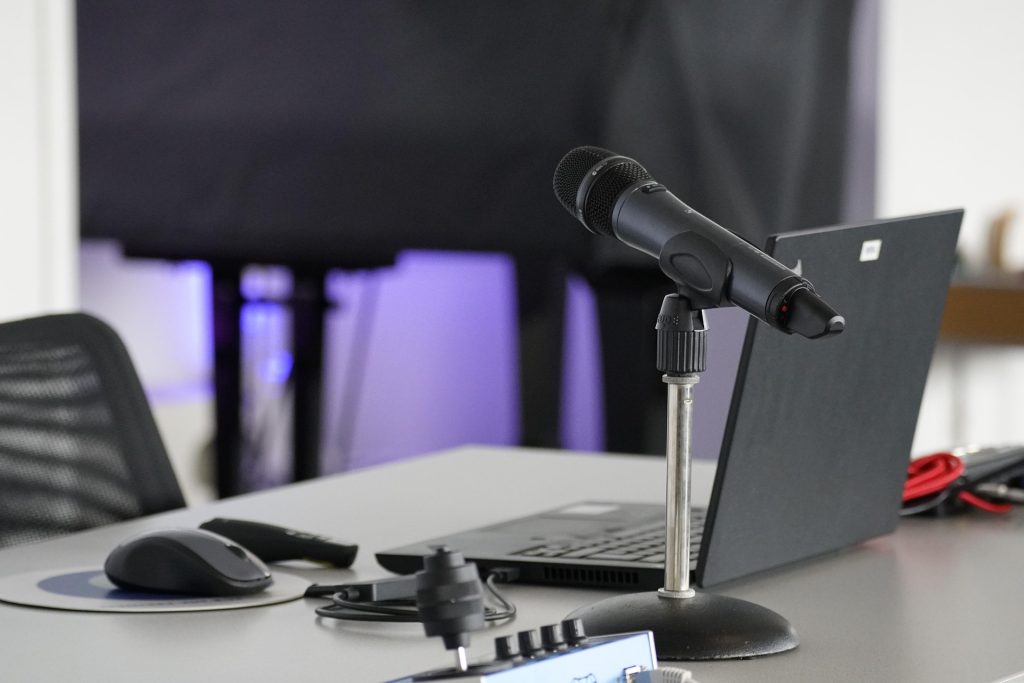
Audiobook production costs are significantly higher than for e-books, and in some cases also than for printed versions. Budget considerations typically include narrator payment, recording studio time and editing, proof listening, and mastering the file to platform specifications.[11]
Distribution of audiobooks has become easier through aggregator platforms and rights marketplaces, which are lowering barriers to access without compromising on quality. Listeners expect clean sound and consistent performance, and technical flaws attract quick negative feedback.
So, what can small presses do if they want to enter the audiobook game? Several factors should be considered:
- Payment models: Decide whether to pay narrators per finished hour or use royalty-share agreements. Per-hour payments reduce long-term revenue risk but require higher upfront budgets. Royalty-share deals lower upfront costs but split future income.
- Title selection: Choose books or authors with proven demand, series potential, or strong audience interest to reduce financial risk.
- Narrator casting: Match the narrator’s voice to genre, tone, and audience expectations. Consistency in series titles can help build listener loyalty. Consider accents, pacing, and emotional delivery.
- Production quality: Invest in professional recording, editing, and mastering to ensure clean sound. Technical flaws can quickly harm reviews and listener retention.
- Distribution channels: Conduct research to understand each platform’s royalty structure and submission requirements.
- Marketing assets: Prepare audio samples, narrator clips, and promotional teasers. Unlike print or e-books, listeners often preview a title via performance before purchase.
Strategy Takeaways for Indie Authors and Small Presses
Audiobooks have quickly become a central part of how audiences engage with stories today. For indie authors and small presses, this means evaluating which titles can thrive in audio; understanding the production and distribution realities; and thinking creatively about narrator, marketing, and accessibility strategies.
Embracing audiobooks offers opportunities to reach new audiences, increase revenue, and add depth to the reading experience through performance. Audio can complement print and e-books, building stronger connections between stories, their authors and listeners. Thoughtful planning and production investment means that small publishers can position themselves to capture a growing segment of the market if they choose to take on the challenge.
[1] Fortune Business Insights. (2026). Audiobooks Market Size, Share & Industry Analysis (2026–2034). https://www.fortunebusinessinsights.com/audiobooks-market-104739
[2] Pangarkar, T. (2026). Audiobooks Statistics & Trends You Should Know. Market.us Scoop. https://scoop.market.us/audiobooks-statistics/
[3] Edison Research. (2024). Audiobook Revenue and the Number of Listeners Continue to Grow. https://www.edisonresearch.com/audiobook-revenue-and-the-number-of-listeners-continue-to-grow/
[4] Similarweb, cited in Pangarkar (2026).
[5] Ibid.
[6] Reuters. (2026). Spotify to let users buy physical books in app through Bookshop.org partnership. https://www.reuters.com/business/spotify-let-users-buy-physical-books-app-through-bookshoporg-partnership-2026-02-05/
[7] Bannon, B. (2025). Opinion: Audiobooks vs. Print Reading. The New York Times. 23 November. https://www.nytimes.com/2025/11/23/opinion/audiobooks-books-print-reading.html
[8] Ji, D., Liu, B., Xu, J., & Gong, J. (2024). Why Do We Listen to Audiobooks? The Role of Narrator Performance, Background Music, Telepresence, and Emotional Connectedness. SAGE Open. 14(2). https://doi.org/10.1177/21582440241257357
[9] Limbong, A. (2025). Does Listening to an Audiobook Count as Reading?. NPR. 7 July. https://www.npr.org/2025/07/07/nx-s1-5454723/does-listening-to-an-audiobook-count-as-reading
[10] Addley, E. (2026). Is listening to an audiobook as good as reading?. The Guardian. January 21. https://www.theguardian.com/books/2026/jan/21/is-listening-to-an-audiobook-as-good-as-reading?
[11] Bloomsbury Publications. (n.d.). How Much Does It Really Cost to Produce an Audiobook?. https://www.bloomsburypublications.com/cost-breakdown-how-much-does-it-really-cost-to-produce-an-audiobook.php?